Mystery Town: Merge Games
- 4.9
- Rating
- 5.00M
- Installs
- Free
- Price

 Analysis by App-foxy
I spent time with Mystery Town - Merge & Cases as a casual puzzle game, and my first impression was that it wants to do more than fill a few spare minutes. The basic idea combines item merging with a mystery to follow, so each small puzzle decision feels connected to a wider reason for playing. That combination gives it a more purposeful rhythm than a standard match-style game, although it also means the experience is not aimed at everyone who wants completely mindless tapping.
This is a free game from Cedar Games Studio, listed for Everyone and available on devices running Android 7.0 or later. It sits in the puzzle category, has passed one million installs, and holds a 4.7 average from around twenty-two thousand ratings. Those numbers suggest a broad audience has found something appealing here, but they do not remove the need to look at how it actually fits into daily play. For me, the important questions are whether the merging remains satisfying, whether the mystery gives the progression a reason to continue, and whether the game stays comfortable during longer sessions.
How the game feels in ordinary play
In ordinary play, I found the game works best when I treat each visit as a small, self-contained step rather than expecting a major revelation every time I open it. That makes it easier to enjoy the steady rhythm of combining items and following a case, while leaving room to notice how the first few tasks teach the game’s basic habits.
You May Also Like

 Blood Strike: 2.5 Anniversary
Blood Strike’s Loadouts Turn Every Drop Into a Tactical Gamble
A close look at Blood Strike’s custom loadouts: how fast access to signature weapons reshapes its battle royale rhythm, rewards preparation, and narrows the gap between fights.

 Pandora - Music & Podcasts
Pandora’s Music Is Easy to Start, but Harder to Recover
Pandora’s strength is its low-effort path from a seed to a station. Its weak spot is how much confidence it asks you to place in connection, setup, and quiet recovery.

 8 Ball Pool
 Is Built on Rivalries, Rematches, and Routine
A close look at the rivalries, rematches, shared routines, and unanswered safety questions that turn a quick pool match into a persistent mobile community.

 Samsung Music
’s Quiet Strength Is Playing What You Already Own
Its reach comes less from spectacle than from dependable access to a personal library. That simplicity is both the app’s strongest retention engine and its ceiling.

 AccuWeather: Weather Radar
AccuWeather Review: A Quick, Clear Forecast for Everyday Decisions
For everyday plans, the best forecast is the one you can understand quickly. AccuWeather makes rain timing, radar, and local conditions easy to act on, with a few trade-offs.

 Hill Climb Racing
Why Hill Climb Racing Still Turns Crashes Into One More Run
A tiny car, a bumpy hill and one more upgrade: Hill Climb Racing keeps resurfacing because its simple chaos makes every near-miss feel personal.
More From Our News Desk
View All News


A gentle start with a clear reason to keep going
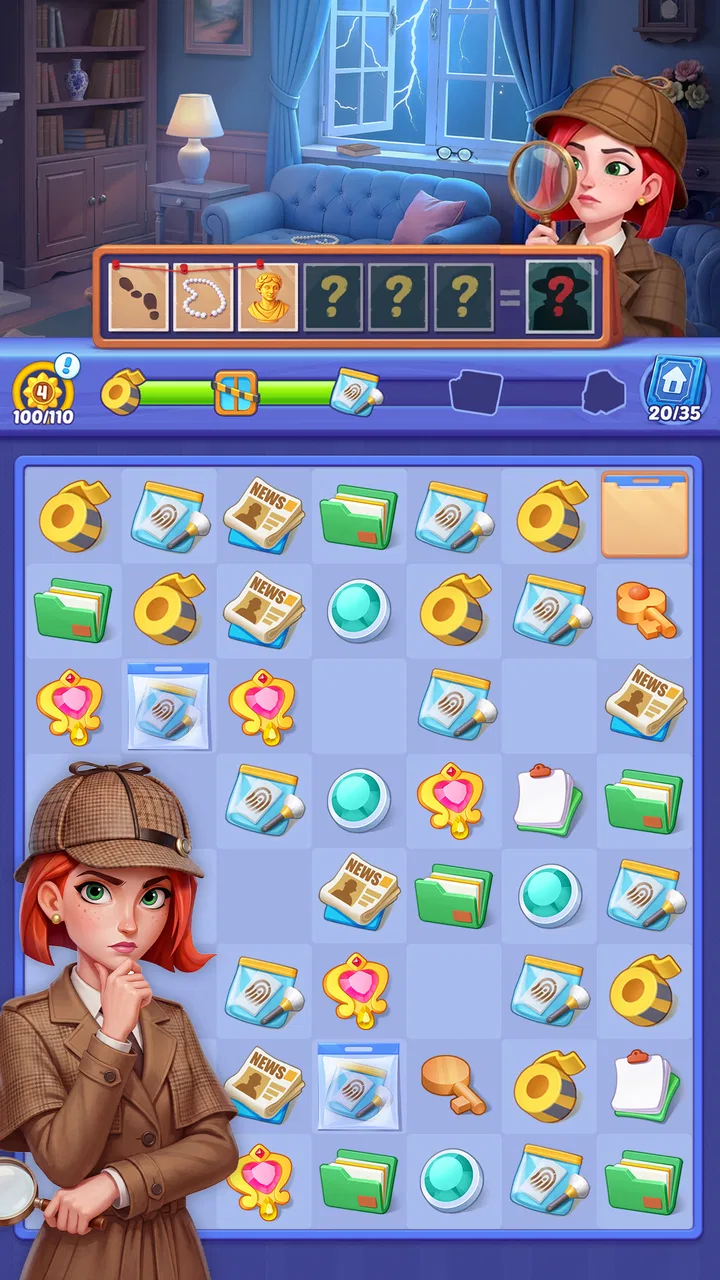
The most approachable part of the design is the merge loop. You bring matching items together to create something more useful, then use the result to solve tasks and move the story forward. That structure is easy to understand without making the whole game feel empty. The puzzle layer gives me a small decision to make, while the case element gives that decision context.
I particularly like this format for short sessions. If I have a few minutes while waiting for an appointment, I can make progress without needing to remember a complicated control scheme. The game does not depend on fast reflexes in the way an action puzzle does. Instead, it asks me to notice what can be combined, consider what I may need next, and avoid wasting useful space or items.
That last point matters more than it first appears. Merge games can become frustrating when every object is treated as disposable. I found it more useful to pause before combining something simply because a merge was available. A better habit is to look at the current task, identify the items that are likely to matter soon, and only then clear the board. This turns the game from automatic matching into light planning.
Speed expectations: relaxed rather than frantic
The perceived speed is one of the game’s strengths. Progress feels designed around deliberate choices, not constant pressure. I can take a moment to inspect the board and decide whether a merge helps the current objective or merely creates another item to manage. That makes the game suitable for players who enjoy puzzle routines but do not want a countdown hanging over every move.
There is a trade-off here. Players who expect rapid level turnover may find the opening rhythm too measured. The mystery gives the game a reason to stretch progress across multiple tasks, so it does not always deliver the immediate burst of completion that a compact arcade puzzle provides. I would choose this over a faster alternative when I want a calm break, but not when I am specifically looking for intense challenge or quick competitive rounds.
My practical advice is to treat each session as a small planning exercise. Start by checking the active objective rather than merging the first obvious pair. Then use the simplest useful combination before chasing a more ambitious chain. This reduces unnecessary clutter and helps the board feel more responsive, even when the underlying pace is intentionally unhurried.
The mystery layer makes the merges matter
Without its case-solving frame, the merge system would risk feeling like an endless arrangement of objects. The mystery gives the activity a narrative direction. I am not only combining pieces for the satisfaction of seeing a new item appear; I am doing it to uncover what comes next and to make the town’s situation clearer.
That connection is also why the game works better for story-minded puzzle players than for people who only care about optimization. The narrative does not replace the puzzle loop, and the puzzle loop does not disappear behind the story. They support each other. When I felt a little tired of organizing items, the case progression gave me a reason to finish another task. When the story moved more slowly, the merge decisions still provided something to do.
The result is a middle ground between a pure merge title and a conventional narrative adventure. It is less demanding than a traditional investigation game, because the main interaction remains accessible, but it has more atmosphere and purpose than a bare collection of matching boards.
Heavy-use moments and board management
The busiest moments are not necessarily the most dramatic ones. They occur when several objectives compete for attention and the available space becomes harder to manage. That is when careless merging can create a chain of awkward items, leaving fewer useful places for the next task. I found that the best approach was to keep a small reserve of flexible pieces instead of immediately converting everything into a higher-level object.
This is one of the more useful lessons for new players: a higher-tier item is not automatically better if it no longer helps with the objective in front of you. I try to separate “progress now” from “progress later.” If a merge directly supports the current request, it is usually worth considering. If it only produces a decorative or distant step in the chain, waiting can keep the board more adaptable.
Longer sessions also expose the game’s main mental friction. The loop is relaxing, but repeated decisions can become routine, especially when the next goal is obvious. I would not describe this as a major flaw, because the game is clearly built for a steady pace. Still, people who need constant novelty may prefer a puzzle game with rapidly changing rules or more varied challenge types.
For everyday use, I think the strongest routine is two short sessions rather than one extended sitting. A brief visit lets me complete a clear task, stop before the board feels crowded, and return later with a fresh view of the available combinations. That approach also makes the narrative progression feel less like a grind.
Reliability and what I noticed during recovery
In my experience, the game’s overall feel is stable enough for ordinary casual use. I was able to approach it as a pick-up-and-play title rather than something that demanded a long uninterrupted commitment. That matters because the game’s appeal depends on returning regularly to continue a case, not merely finishing one isolated puzzle.
Recovery is especially important in a merge game. If I leave during a busy board state, I want to be able to come back and understand what I was doing without rebuilding my plan from memory. The objective-driven structure helps with that: the active task gives me a natural starting point, and the board itself shows which pieces are available. I still recommend checking the current goal before making a move after a break, because a quick merge made from memory can send the board in the wrong direction.
I would avoid making a hard claim about performance on every phone, since hardware, storage conditions, and background activity can change the experience. What I can say is that the game’s design does not rely on fast physical controls, so a momentary pause is less damaging than it would be in a timing-based puzzle. If the game needs a moment to catch up, the consequence is usually a slower decision rather than a lost split-second action.
Device constraints and the free-to-play trade-off
The Android requirement of version 7.0 or newer makes the game accessible to a wide range of devices, including older phones that cannot run many recent releases. That does not mean every older handset will feel identical, but it does make the title easier to consider for people who are not using a current flagship.
Resource demands are best judged by the type of play rather than by assumptions. This is a puzzle game built around merging and cases, not a visually intensive action title, so I would expect it to be a more sensible choice for modest hardware than a large three-dimensional game. Even so, older devices may have less room for extended sessions when other apps are active. Closing unnecessary background apps before playing is a practical step if the phone already feels strained.
The game is free to start, which lowers the barrier for trying it. It also includes optional purchases ranging from $0.99 to $99.99 per item. That range is worth keeping in mind before settling into the progression. I can recommend beginning without spending anything and first deciding whether the merge loop itself is enjoyable. If the game becomes part of your daily routine, set a personal limit in advance rather than making purchase decisions when a task feels slow.
This is also where the game may not suit every player. Anyone who strongly dislikes in-app purchases, even when a game can be tried for free, may prefer a paid puzzle with a fixed structure. Mystery Town is a better fit for someone comfortable with gradual progress and optional spending than for someone who wants every mechanic unlocked immediately and permanently.
Who will get the most from it?
I would recommend it to players who enjoy organizing objects, making small strategic choices, and following a light mystery at the same time. It is a good match for a commute, a quiet evening, or a short break when you want something more engaging than scrolling but less demanding than a competitive game.
It is also suitable for families looking for an Everyone-rated puzzle experience, provided that adults understand the optional purchase model and decide how it should be handled on the device. The controls and basic loop are approachable, while the case structure gives younger or less experienced players a reason to keep exploring beyond a single merge.
On the other hand, I would skip it if your ideal puzzle game has strict logic problems, wordplay, or a clear final solution. The merging is the main activity, and the mystery works as a reason to continue rather than as a replacement for a dedicated detective puzzle. I would also point fans of fast match games toward a quicker alternative, because this title rewards patience more than speed.
How it compares with familiar puzzle alternatives
Compared with a standard match-three game, this title feels less focused on immediate board clearing and more focused on building a chain of useful objects. That makes each move feel slower, but it also gives the game a stronger sense of continuity. You are not simply trying to beat one board before moving on; you are managing progress toward a broader case.
Compared with a pure merge game, the mystery adds a reason to care about the next objective. The benefit is motivation. The cost is that players who prefer open-ended optimization may find the task structure restrictive. A pure merge title can sometimes be enjoyed as a sandbox, while this game asks you to keep the current case in mind.
Compared with a traditional hidden-object mystery, the interaction here is more forgiving and less dependent on visual precision. That makes it easier to play casually, but it may feel less satisfying to someone who wants to inspect detailed scenes and solve clues through deduction. I see it as a hybrid: the merge system carries the moment-to-moment play, and the mystery supplies the larger arc.
Three habits that improve the experience
First, I recommend reading the active request before touching the board. This sounds obvious, but it prevents the common mistake of combining items that look convenient while moving away from the immediate goal. The best merge is often the one that solves a present need, not the one that creates the most impressive object.
Second, keep the board flexible during a case. Do not fill every available area with high-level pieces if they are not currently useful. A little empty space is valuable because it gives you room to react when the next objective changes. This is a small management choice, but it has a noticeable effect on how often the board feels blocked.
Third, use natural stopping points. After completing a clear task or reaching a story transition, pause instead of forcing another long chain. Returning later with a clean objective makes the game feel more purposeful and reduces the sense that you are merging simply to occupy time. This is particularly helpful for players who enjoy the mystery more than the repetitive side of the puzzle loop.
One more practical point is to decide how you feel about optional purchases before you become invested in the cases. Since the game is free and offers items at several price levels, trying the early experience without spending gives you a fair test of whether the core loop is enough. In my view, that is the most sensible way to approach it: judge the planning and story rhythm first, then decide whether any convenience is worth paying for.
Version, access, and long-term appeal
The current version is 1.17.0, and the game was released on Apr 11, 2025. Those details are useful when checking compatibility or comparing the experience with older impressions, especially because puzzle games can change their balance and presentation over time. The developer is Cedar Games Studio, and the title’s continued presence among widely installed casual games indicates that it has found a substantial audience.
For me, long-term appeal depends on whether the player enjoys the routine itself. The mystery can encourage continued play, but it cannot completely hide the fact that merging remains the central activity. If you like gradually improving a board and completing linked requests, the structure can stay comfortable for repeated visits. If you need a new mechanic in every session, the familiar loop may eventually feel too predictable.
That distinction is more useful than simply calling the game addictive or relaxing. It is relaxing when I approach it as a sequence of small decisions. It becomes less enjoyable when I expect every session to deliver a major revelation or a dramatic puzzle twist. Setting the right expectation makes a significant difference.
My final performance verdict
My overall impression is that Mystery Town is a polished-feeling casual puzzle choice for players who want a calm merge system tied to an unfolding mystery. Its perceived speed is measured, its controls are easy to return to after a break, and its design should be more comfortable on modest Android hardware than visually demanding game genres. I would still leave room for device-specific differences, particularly during longer sessions or when a phone is already busy with other apps.
The strongest part is the balance between immediate organization and longer-term purpose. The most important limitation is that the same steady loop will not satisfy people looking for intense action, deep deduction, or a completely purchase-free experience. I also think the best results come from planning around objectives rather than merging automatically.
After trying it, I would recommend the game to a friend who enjoys story-flavored puzzles and wants something that can be played in short, low-pressure visits. I would tell a friend who prefers fixed-price games or demanding logic challenges to choose another option instead. For patient puzzle players, the real appeal is not speed but the small satisfaction of turning a cluttered board into a clear next step.
In short, the free entry point makes it easy to test, the Everyone rating broadens its audience, and the mystery gives the merging a useful sense of direction. Just approach it as a gradual case-solving routine, keep the board flexible, and make deliberate choices about optional spending. With those expectations, it is a thoughtful and accessible addition to the puzzle category rather than just another set of matching tasks.
FAQs for Mystery Town: Merge Games
01What is the main objective of Mystery Town - Merge & Cases?
Mystery Town - Merge & Cases is a captivating puzzle game where players merge items to solve intriguing cases. The goal is to collect clues, unlock new areas, and unravel mysteries hidden within the town. It combines engaging storytelling with challenging puzzles, providing a unique detective experience for players.
02Is Mystery Town - Merge & Cases free to play?
Yes, Mystery Town - Merge & Cases is free to download and play. However, it offers in-app purchases for players who wish to enhance their gameplay experience. These purchases can include additional lives, boosters, or special items to progress through the game more quickly.
03Can I play Mystery Town - Merge & Cases offline?
Mystery Town - Merge & Cases requires an internet connection for the initial download and some in-game features. While some aspects of the game may be accessible offline, for the best experience, including syncing progress and accessing new content, playing online is recommended.
04What platforms is Mystery Town - Merge & Cases available on?
Mystery Town - Merge & Cases is available on both Android and iOS platforms. Players can download the game from the Google Play Store or the Apple App Store, making it accessible to a wide range of mobile users who enjoy mystery and puzzle games.
05Are there any special events or updates in Mystery Town - Merge & Cases?
Yes, the developers frequently update Mystery Town - Merge & Cases with new content, including special events, seasonal challenges, and additional storylines. These updates keep the game fresh and engaging, encouraging players to return regularly to explore new mysteries and earn exclusive rewards.
Pros
- Engaging storyline with twists.
- Visually appealing graphics.
- Easy-to-learn gameplay mechanics.
- Frequent updates with new content.
- Interactive puzzles enhance experience.
Cons
- In-app purchases can be pricey.
- Requires constant internet connection.
- Limited lives can be frustrating.
- Ads can interrupt gameplay flow.
- Some puzzles feel repetitive.

Mystery Town: Merge Games
Gallery